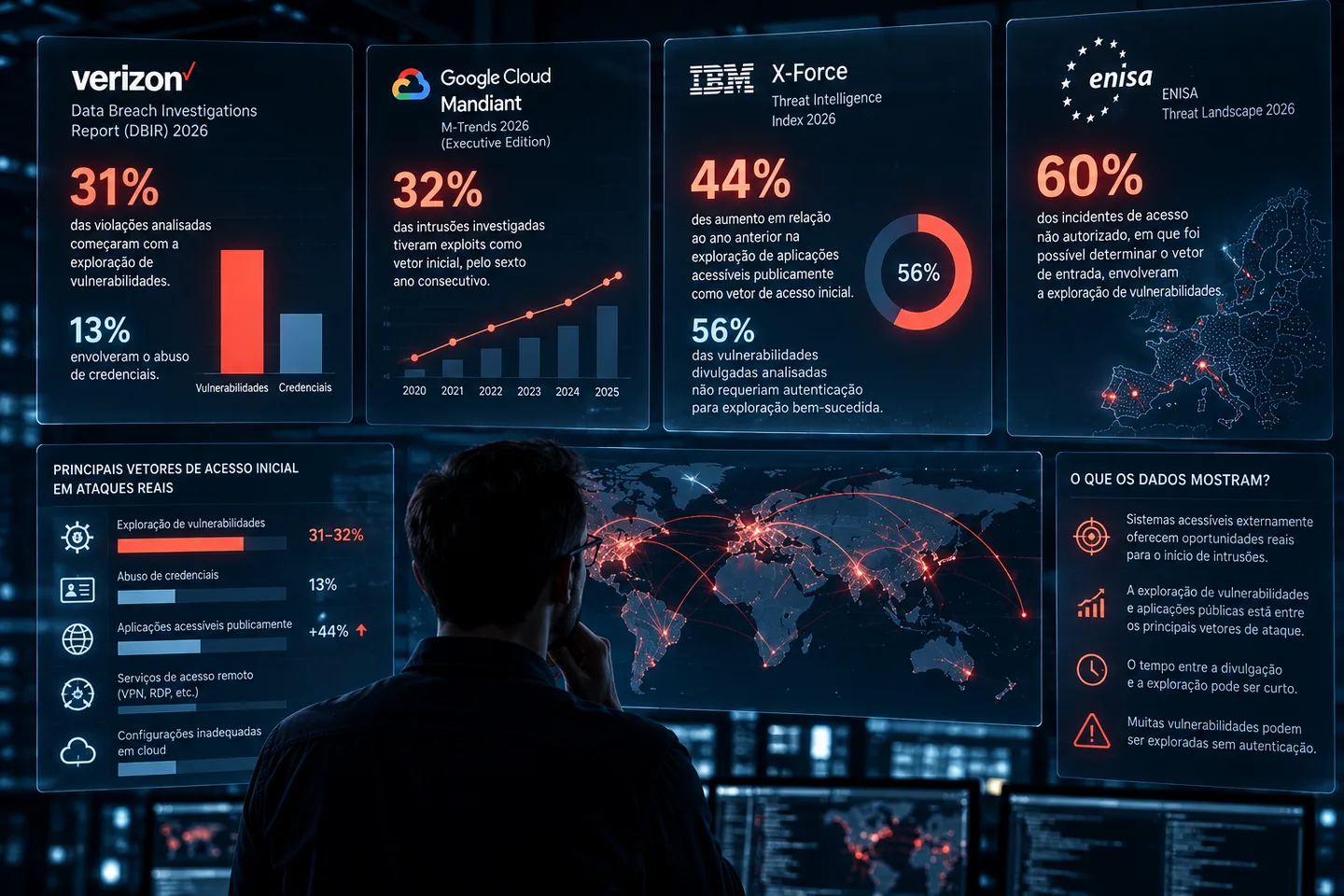

Finding security problems has never really been the hardest part.
A scanner finds vulnerabilities. An Attack Surface Management tool discovers assets and exposures. Threat Intelligence brings new information. Pentests uncover weaknesses that other analyses missed. Internal teams also know about issues that have been sitting in the backlog for months.
Over time, an organization can end up with thousands of findings coming from different places.
Then a much harder question appears:
what do we do first?
Fixing everything would be the comfortable answer, but it is rarely realistic. Teams are limited, change windows exist, some systems cannot stop, technical dependencies get in the way, and the business has priorities of its own.
Simply looking for the vulnerabilities with the highest CVSS is not enough either. As we discussed in Vulnerability Management, severity matters, but it does not explain by itself which exposures deserve attention first.
This is where Continuous Threat Exposure Management (CTEM) starts to make sense.
CTEM is a continuous approach to identifying, prioritizing, validating and reducing an organization’s cyber exposure. The term was proposed by Gartner and organizes that work into five stages — Scoping, Discovery, Prioritization, Validation and Mobilization — that repeat as a cycle rather than happening once. What separates it from traditional vulnerability management is less about finding more problems and more about deciding, with evidence, which of them deserve action first. In practice that means the cycle only closes when somebody treats the exposure and the result is verified: finding and prioritizing, on their own, do not reduce risk.
CTEM is not a tool
This is probably the first point worth clarifying.
CTEM is not a scanner, a specific platform, or a new product category that automatically solves cyber exposure.
It is a structured approach to continuously identify, prioritize, and validate exposures, and to carry that information through to remediation or another treatment decision.
Gartner describes CTEM as a pragmatic, systemic approach to continually evaluating the accessibility, exposure, and exploitability of an organization’s digital and physical assets.
The word continuous can also cause some confusion.
It does not necessarily mean running a scanner 24 hours a day.
The idea is that exposure management is recurring and follows changes in the environment. New assets appear, configurations change, vulnerabilities are disclosed, attack techniques evolve, and something that did not look important yesterday may become relevant today.
That is why CTEM works more like a cycle than a project with a clearly defined beginning and end.
The five stages help explain the process
The CTEM model is commonly organized into five stages:
- Scoping — deciding what will be observed: the external surface, critical systems, applications, cloud environments or a specific set of assets.
- Discovery — establishing which assets and exposures exist inside that scope.
- Prioritization — reducing the volume found to what actually matters, weighing exploitability, exposure and context rather than severity alone.
- Validation — looking for evidence that what appears exploitable really is.
- Mobilization — getting the information to whoever can act on it, following the treatment through and verifying the result.
The sequence helps explain the process, but in practice these stages do not live in isolation.
It starts with Scoping.
Before looking for exposures, we need to decide what we want to observe. It may be the organization’s external attack surface, specific critical systems, applications, cloud environments, or another defined set of assets.
It sounds simple, but it prevents a fairly common security problem: collecting a huge amount of information without being very clear about what we intend to do with it.
Then comes Discovery.
This is where we try to understand which assets and exposures exist within that scope. Depending on the environment, we may find vulnerabilities, exposed services, misconfigurations, leaked credentials, unknown assets, and other paths that deserve analysis.
In large environments, it usually does not take long before there is quite a lot to look at.
And finding a lot leads us to the next problem.
Discovery does not tell us what to fix first
Prioritization exists precisely because volume and risk are not the same thing.
Imagine Discovery identifies 3,000 exposures.
Treating all 3,000 as equally urgent almost eliminates the value of prioritization. In the same way, simply sorting everything by severity can leave out important information about exploitability, exposure, and context.
The job then becomes reducing that universe to something the organization can realistically analyze and address.
That requires context.
A critical vulnerability on an isolated asset may deserve a different decision from a lower-severity vulnerability in an Internet-facing application with evidence of exploitation.
A published service may look concerning at first, but existing controls may substantially reduce its exposure.
A leaked credential may be old and already revoked. Another may still work.
Discovery tells us that something exists. Prioritization starts asking how much it actually matters.
This is where CTEM begins to move away from a simple “find more vulnerabilities” mindset.
But we are still working with hypotheses
Even after prioritization, there is another question worth asking:
is what looks exploitable actually exploitable?
That is the role of Validation.
There is an important nuance here as well. Validation does not necessarily mean exploiting every vulnerability or running a full Pentest against everything that was found.
Depending on the exposure, we can look for different kinds of evidence.
Does the service actually respond externally? Is the credential still valid? Does the vulnerability have the technical conditions required for exploitation in that environment? Does an existing control block the path that initially looked possible?
In other cases, deeper offensive analysis may be needed to understand the situation properly.
The goal is to reduce uncertainty.
There is a considerable difference between saying:
“We found something potentially vulnerable.”
and being able to explain:
“We found this exposure, it is reachable under these conditions, and we have this evidence that increases its relevance.”
The better the evidence, the better the decision about what to do next tends to be.
And someone still has to do something about it
This brings us to a stage that may sound less interesting technically, but without it the rest of the cycle loses much of its value: Mobilization.
Finding, prioritizing, and validating an exposure does not mean the exposure has been reduced.
Someone needs to receive the information. Ownership has to be defined, treatment evaluated, fixes implemented where possible, certain risks accepted where appropriate, and the outcome checked afterward.
In practice, several teams may be involved.
Security identifies an exposure. Infrastructure needs to change a service. Development fixes an application. Cloud removes an inadequate configuration. Another team may need to assess whether the change could affect operations.
That flow is not always fast.
And the problem is not always technical.
Sometimes an exposure is already known and understood but remains open simply because it never reached the right person, has no clear owner, or is competing with other priorities.
That is why the last stage of CTEM does not end with a report.
The objective is to turn information into exposure reduction.
Then the cycle starts again
Suppose an organization completes this process today.
It defined the scope, discovered exposures, prioritized what seemed most relevant, gathered evidence, and mobilized the responsible teams.
Is the environment now solved?
Probably not.
Tomorrow a new application may go into production. Next week a relevant vulnerability may be disclosed. A new domain may be registered. A configuration may change. A credential may appear in a leak.
Or an exposure that had been considered low priority may suddenly have public exploit code available.
The environment changed, so some decisions need to be revisited.
That movement is what gives meaning to the Continuous in CTEM.
It is not simply about repeating scans. It is about repeating the decision process as exposures and context change.
Where do CTEM, ASM, and Vulnerability Management meet?
The concepts overlap in some areas, but they are not the same thing.
Vulnerability Management traditionally focuses on identifying and treating vulnerabilities in the organization’s assets.
Attack Surface Management helps maintain visibility over the assets and exposures that make up the attack surface, especially from an external perspective.
CTEM organizes a broader approach to continuously managing exposures through discovery, prioritization, validation, and mobilization.
That means ASM can support a CTEM program. Vulnerability Management can as well.
Threat Intelligence, security tools, offensive validation, and internal processes enter different parts of the same cycle.
For that reason, asking which of these approaches “replaces” the others is probably not very useful.
In many environments, they need to work together.
A Vulnerability Management team may know about thousands of vulnerabilities. ASM may reveal an asset that was not in the inventory. Threat Intelligence may show that a particular vulnerability has started being exploited. Validation may indicate that an apparently critical exposure does not work under the conditions of that environment.
Each piece of information changes the decision a little.
CTEM should not mean finding more problems
This may be one of the most important interpretations to avoid.
If an organization already has 20,000 findings and implements CTEM only to reach 30,000, it probably has not solved its main problem.
The number of discoveries may increase, especially at the beginning.
But the benefit should appear somewhere else: in the ability to understand which exposures deserve attention, obtain evidence when needed, and move the most relevant ones toward action.
This also explains why CTEM is not simply an evolution of the vulnerability scanner.
Technology helps a great deal in several stages. Automation does too.
Still, someone has to define scope, interpret context, decide priorities, and mobilize the organization.
Some of those decisions can increasingly be supported by data and automation. Others still depend on what the organization knows about its own environment.
In the end, the question CTEM is trying to help answer is not:
“How many problems did we find?”
It is a slightly more useful question:
“Which exposures should we focus our efforts on now?”
And when that answer changes, the cycle starts again.
References
- Gartner — Strategic Roadmap for Managing Threat Exposure
- Gartner — From Vulnerability Management to Exposure Management
- SANS Institute — Continuous Threat Exposure Management
- SANS Institute — CTEM Maturity Model
Continue exploring
- CTEM in practice: how Lion Focus sustains the cycle
- What is an attack surface and why does it change continuously?
- Vulnerability Management: why severity alone is not enough to set priorities
- What is an attack vector? Understanding its relationship with the attack surface
Want to bring this perspective to your attack surface?
See how Lion Focus helps discover, monitor, validate, and prioritize cyber exposures.

Leonnes Cybersecurity
Cyber Exposure Platform